
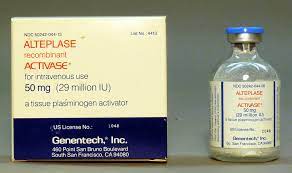
Casas farmacéuticas las cuales producen el fibrinolítico medicina, precio vs inteligencia artificial para predecir stroke, buscando soluciones para el abaratamiento de este medicamento.
There are several companies that produce fibrinolytic medicine for the treatment of stroke, but the most commonly used medication is called alteplase, which is marketed under the brand name Activase.
Activase is manufactured by Genentech, a subsidiary of Roche, which is a global biotechnology and pharmaceutical company.
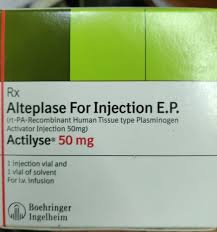
Other companies that produce fibrinolytic drugs include Boehringer Ingelheim (manufacturer of the drug tenecteplase, marketed under the brand name Metalyse),
And Janssen Pharmaceuticals (manufacturer of the drug streptokinase, marketed under the brand name Kabikinase).
It’s important to note that not all stroke patients are eligible for fibrinolytic therapy, and the decision to use these drugs must be made by a qualified medical professional based on several factors, including the patient’s age, medical history, and the time since the onset of stroke symptoms

AHORA DÍGAME USTED QUE CUESTA ESTA MEDICINA:
The cost of a fibrinolytic drug can vary depending on the specific drug, the dosage, the frequency of treatment, and the location where the treatment is received.
As an example, the cost of the fibrinolytic drug alteplase (also known as tPA) in the United States can range from several thousand to tens of thousands of dollars per treatment, depending on the hospital and the extent of the treatment. In some cases, insurance may cover the cost of treatment, but patients may still be responsible for co-pays or deductibles.
It’s important to note that fibrinolytic drugs are prescription medications and should only be used under the guidance of a healthcare professional. The cost of treatment will be determined by a doctor or healthcare provider based on the specific needs and circumstances of the patient
COMO LA INTELIGENCIA ARTIFICIAL PUEDE PREDECIR UN STROKE?
Artificial intelligence (AI) has the potential to predict future medical complications in a person by analyzing various data points, such as medical history, lifestyle, genetic information, and environmental factors. AI models can be trained on large datasets of medical records, including patient demographics, medical histories, and clinical outcomes, to identify patterns and make predictions about future health risks and potential complications.

USANDO ALGORITMOS
For example, AI algorithms can analyze medical images, such as X-rays, CT scans, and MRIs, to detect abnormalities and predict the likelihood of developing certain medical conditions, such as cancer or heart disease. AI can also be used to analyze electronic health records (EHRs) and other medical data to identify patients who are at higher risk of developing specific conditions, such as diabetes or hypertension.

However, it’s important to note that AI is not a perfect predictor of future medical complications. The accuracy of AI predictions depends on the quality and completeness of the data used to train the model, as well as the complexity of the medical conditions being predicted. Additionally, AI predictions are not infallible and should always be used in conjunction with the expertise of healthcare professionals.
In summary, AI has the potential to predict future medical complications in a person, but its accuracy and usefulness in a clinical setting depend on various factors, including the quality of data used to train the model and the complexity of the medical conditions being predicted.
732-277-9640
info@ahpsi.org
 AHPSI,Asoc.Hispana de profesionales de la salud, inc,NY