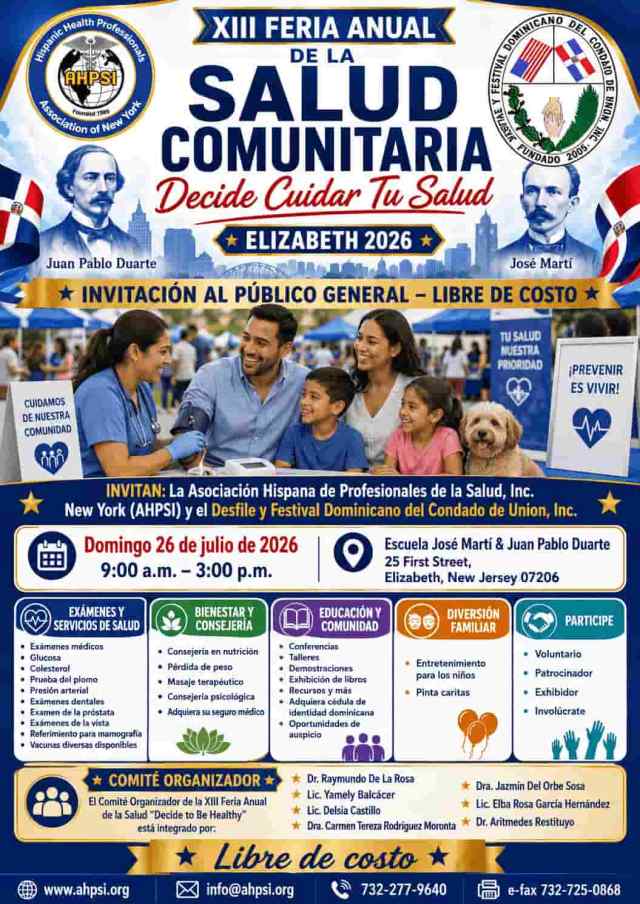
Hispanic Association of Health Professionals, Inc.
AHPSI
Community Health Fair Program
“Decide to Be Healthy”
How to Better Organize Your Health Fair: 5 Key Forms
Informational guide for community health fair coordinators
Organizing a community health fair requires planning, structure, and a clear documentation system. Forms are essential tools that help guide participants, coordinate available services, document community participation, and support the work of coordinators, volunteers, agencies, and health professionals.
In our “Decide to Be Healthy” community health fairs, each form serves a specific purpose. Proper use of these forms helps improve participant flow, avoid duplication, identify community needs, strengthen internal communication, and ensure that each attendee receives the appropriate guidance.
Below are five key forms that every organizing committee should prepare before setting up a community health fair.
1. General Patient Registration Form
The General Patient Registration Form is usually the first document completed by each attendee upon arrival at the health fair. Its main purpose is to collect basic information to identify the participant within the event’s organizational system and help guide them to the appropriate service areas.
This form may include name, age, phone number, city of residence, and other general information needed for organizational purposes. It is recommended that the form remain simple, clear, and respectful, avoiding unnecessary or sensitive questions.
Importance:
This form helps document the total number of participants, organize the flow of attendees, and measure the community impact of the health fair.
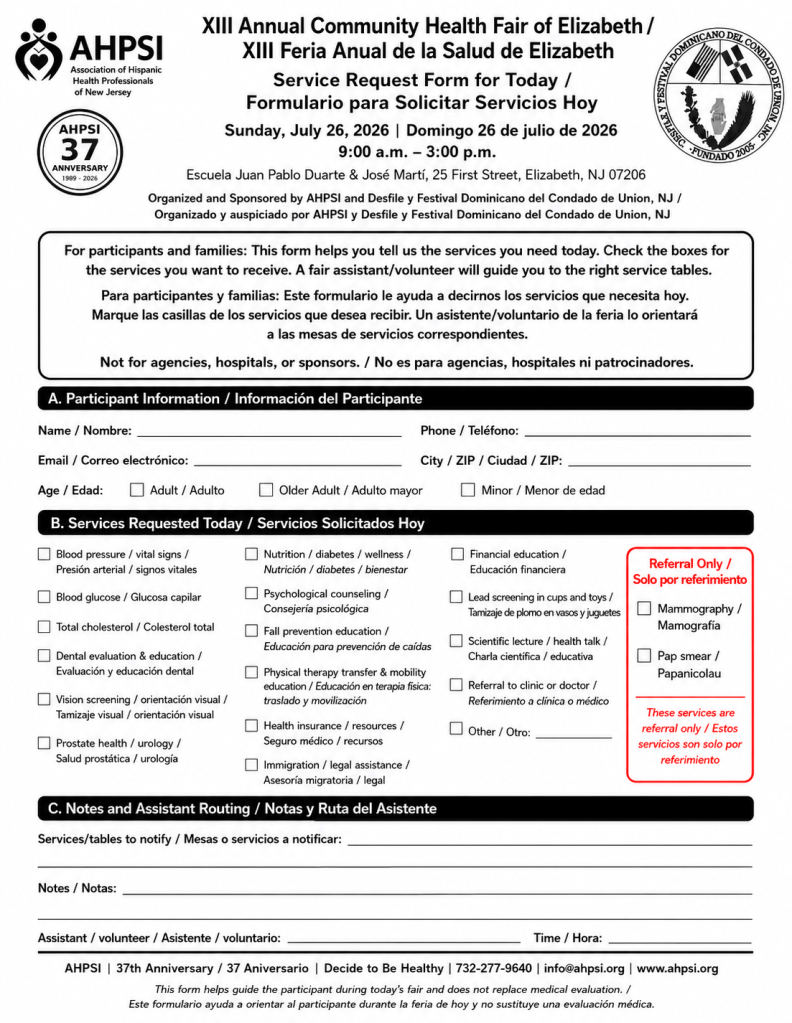
2. Patient Services Form: In Services
The Patient Services Form: In Services is designed to allow each attendee to mark or indicate which services they are seeking during the health fair. This form may include available areas such as blood pressure screening, glucose testing, cholesterol screening, vision services, dental services, nutrition counseling, psychological counseling, health education, legal guidance, social services, mammography referral, Pap smear referral, and other available services.
This form may accompany the participant throughout the fair and allows coordinators, volunteers, and service-area leaders to quickly identify the attendee’s needs and direct them to the correct location.
Importance:
This form helps identify the participant’s needs, improves circulation throughout the fair, reduces confusion, and allows each person to access the appropriate service more efficiently.
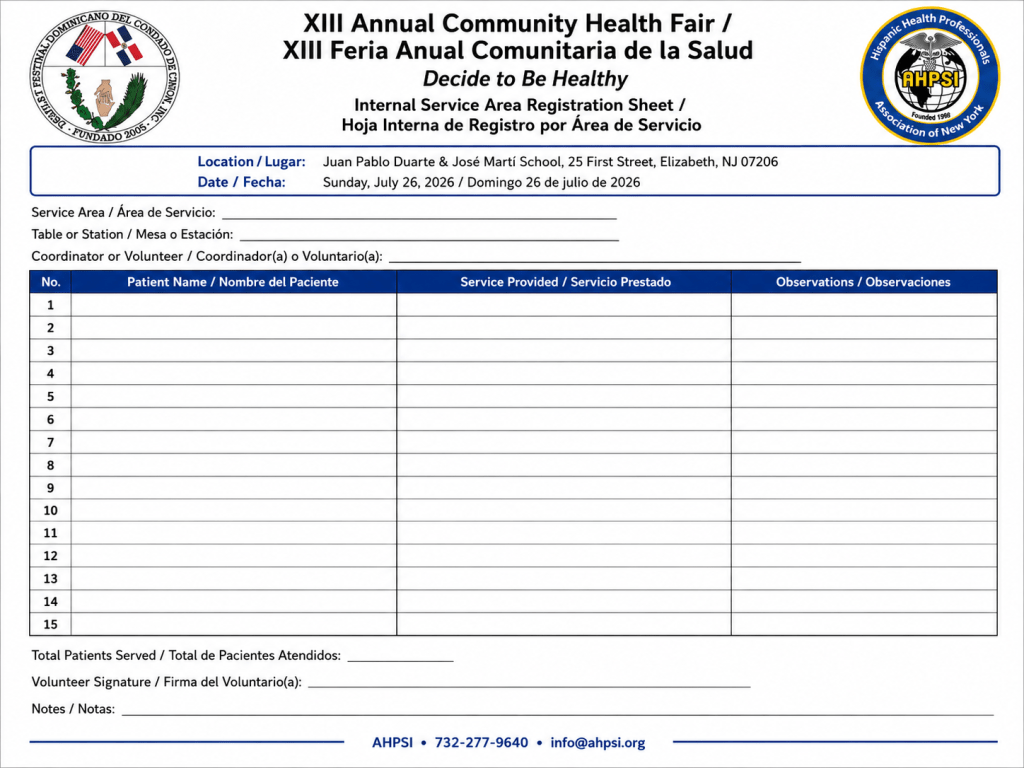
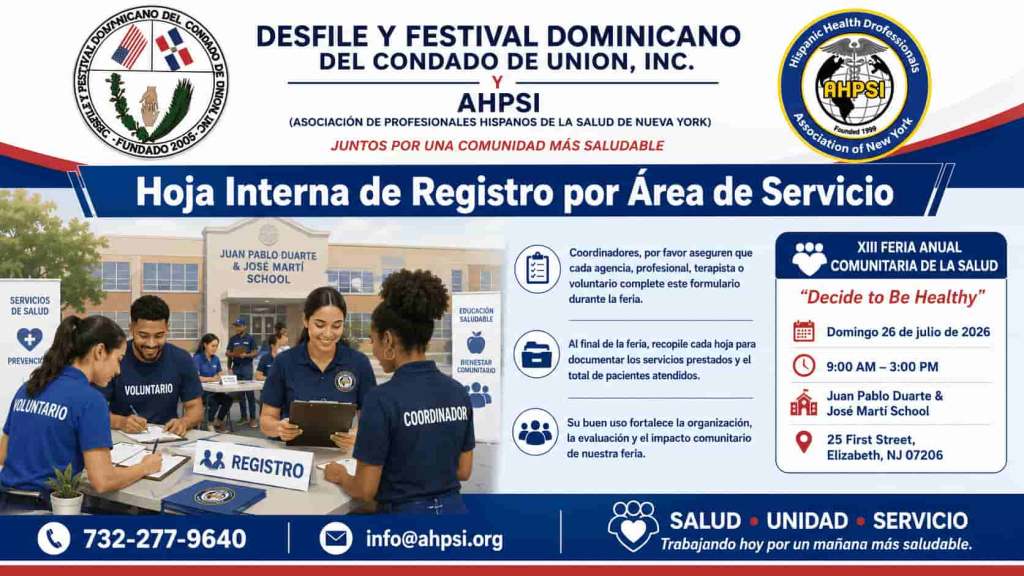
3. Internal Service Area Registration Sheet
The Internal Service Area Registration Sheet should be available at each table, station, or area where a specific service is being offered. For example, there may be one sheet for blood pressure, another for glucose testing, another for dental services, another for nutrition counseling, another for mental health counseling, and so on.
Its purpose is to help each service area document how many people were served, what type of service was provided, and any general observations needed for internal reporting.
Importance:
This form helps evaluate the volume of services provided in each area, identify the most requested services, and prepare a more complete final report. It also supports better planning for future fairs by helping determine the number of materials, supplies, professionals, volunteers, tables, and chairs needed.
4. Registration Form for Agencies and Professionals Providing Services
This form should be completed before the fair by each agency, institution, community organization, or professional who will participate by offering services. It should collect information such as organization name, contact person, phone number, email address, type of service to be provided, number of representatives attending, and logistical needs.
It may also include questions about whether the agency or professional requires a table, chairs, electricity, private space, covered area, mobile unit access, or special materials.
Importance:
This form helps confirm institutional participation, organize table assignments, prepare the service map, and prevent confusion on the day of the event. It is essential for professional and organized coordination.
5. Patient Referral Form
The Patient Referral Form is used when a participant needs medical, dental, educational, social, legal, or community follow-up after the health fair. Not every service can be completed on the same day; therefore, a referral form helps guide the attendee toward the next step.
This form may be used for referrals to clinics, physicians, prevention programs, dental services, mental health services, health insurance assistance, mammography, Pap smear, legal services, social services, or other areas requiring continuity of care.
Importance:
This form turns the health fair into a bridge toward ongoing services. It helps ensure that the fair is not only a one-day event, but also a real opportunity to connect the community with continued support and follow-up care.
Additional recommended forms
In addition to the five main forms, the organizing committee may consider other support documents to strengthen the operation of the health fair.
Informed Consent Form
This form may be useful when basic screenings, evaluations, or services require the participant’s authorization. It should clearly explain that the services offered are preventive, educational, or guidance-based, and do not replace a complete medical consultation.
Volunteer Registration Form
This form helps document who will support registration, orientation, translation, set-up, clean-up, logistics, material distribution, and breakdown. It may include name, phone number, available schedule, assigned area, and emergency contact if needed.
Materials and Equipment Control Sheet
This sheet helps verify materials before, during, and after the fair, including glucometers, test strips, lancets, gloves, alcohol pads, blood pressure monitors, pens, folders, printed forms, signs, tables, chairs, and educational materials.
Health Fair Evaluation Form
This form allows the committee to collect feedback from participants, agencies, professionals, and volunteers. The information gathered can help identify strengths, areas for improvement, and recommendations for future health fairs.
Incident or Special Situation Report Form
This document should be available to record emergencies, minor accidents, conflicts, lost belongings, logistical problems, or any situation that requires follow-up by the organizing committee.
Final recommendation
Every organizing committee should review all forms before the event, print enough copies, assign responsible individuals for each area, and train volunteers on how to use the forms correctly.
A strong form system allows the health fair to operate with greater order, safety, and professionalism. It also helps prepare reports, evaluate community impact, and improve the planning of future activities.
The mission of “Decide to Be Healthy” is to serve the community with dignity, respect, prevention, education, and access to essential health services.
For more information:
732-277-9640
info@ahpsi.org